Yellow Flag Iris
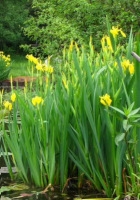
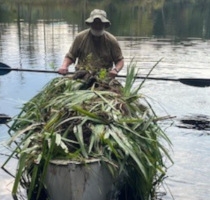
Yellow Flag Iris - the Yellow Iris Crew spent many many hours identifying, marking, and removing this tough invasive. We also had help from several shore owners with removing the plants, which was much appreciated. We found 200-300 clumps of yellow iris in many different stages of growth. Many of the clumps did not flower and it made it hard for people to identify this plant from the blue iris, which is not invasive.
There is a good YouTube video on how to tell the difference that may be watched here.
The trick is to feel the sword-like stem of the Yellow flag iris and you will feel a thickened cord in the middle of the stem that you do not notice with the blue iris.The Yellow Flag Iris has resins that can cause skin irritation. Please wear gloves and long sleeves when touching the plant. The Association owns two sets of removal tools and if you need to use these shovels, please contact a board member. The yellow iris has fleshy roots up to a foot long and many branching tuberous pink rhizomes by which the plants spread outward. The rhizomes can persist for over 10 years in the soil and can even survive for more than 3 months if dried. Rhizomes can break into pieces that can also be spread by flowing water. The rhizomes have long white roots that make removal even more difficult. If you find this plant, please dig it up and remove all the debris. If you are unable to dig it up, please cut off the flower, seed pods, and any remnants of any flower or seeds by burning or placing them in the garbage. Please call a board member and we will facilitate having the yellow flag removed from your shoreline.
Many people asked why this beautiful flower is invasive? The Yellow Flag Iris crowds out native plants; it is poisonous to humans and animals if ingested; disrupts ecosystems; degrades native fish habitat, bird nesting and rearing sites. It will take time to control the Yellow Flag Iris growth and will be an ongoing project.
Special thanks go out to Dan Root, Mark Coming, Debi Pierce, Arnie Loucks, and Jen Condrey for their hard work on this effort.