Garlic Mustard
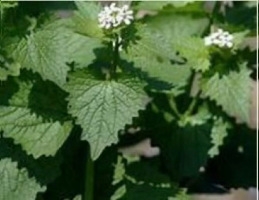
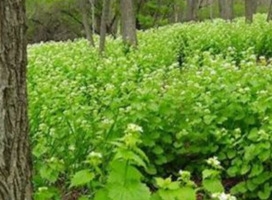
In addition to the Yellow Flag Iris, Garlic Mustard has been spotted around the lake. According to The Nature Conservancy “Garlic mustard, originally from Europe and Asia, has become a very troublesome invasive plant across the Northeast, Midwest and Northwest of the United States. The plant was introduced to North America in the mid 1800s for its herbal and medicinal qualities and as erosion control. Its aliases are Poor Man’s Mustard, Hedge Garlic, Garlic Root and Jack-by-the-Hedge.
It is called garlic mustard because its leaves have a garlic smell when they are crushed. During its first year, garlic mustard leaves are rounder and take on a rosette formation at ground level. In their second year, the leaves grow up a flowering stem and become more triangular and heart-shaped with toothed edges. Small white four-petaled flowers emerge in the spring. This plant spreads its seeds in the wind and gains a foothold in fields and forests by emerging earlier in spring than many native plants. By the time native species are ready to grow, garlic mustard has blocked their sunlight and outcompeted them for moisture and vital nutrients. Because the understory of a forest is so important for insects and other species at the bottom of the food chain, invaders like garlic mustard can weaken the entire ecosystem. Further, garlic mustard’s roots release chemicals that alter the important underground network of fungi that connect nutrients between native plants, inhibiting the growth of important species like trees.
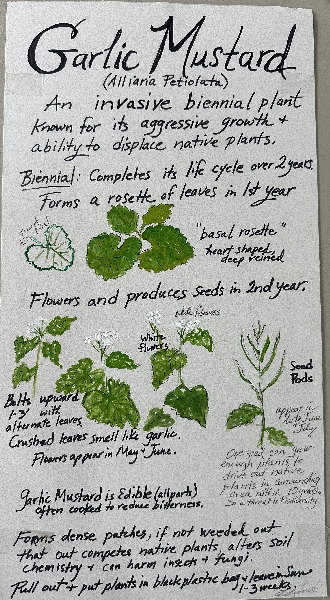
Fortunately for us, we have options to rid ourselves of this pest of a plant. How Do You Kill Garlic Mustard? The ultimate goal in removing garlic mustard is to prevent seed development and spreading until the existing seed bank is depleted. Unluckily for us, this may take 2-5 years in any confined area. Vigilance is key, as garlic mustard can sprout up even when you're sure that you've gotten rid of every last one. The best way to get rid of garlic mustard is manually: Try to pull up the plants before they set seed, because the action of yanking the plant from the ground will spread the seed. A good time to pull garlic mustard is after it rains, when it’s easier to get all or most of the long tap root. After you have pulled the plants, bag them up and throw them out with your garbage; do not compost. For more information, visit the USDA's National Invasive Species Information Center. The task may seem daunting, but if you watch carefully, you will see that native plants and even tree seedlings steadily re-populate the areas where you have removed the garlic mustard. You are helping the area become healthier!